Tuesday, November 29, 2011

Waiting with Mary

Having grown up a Baptist boy in Louisiana, I don't come from a faith tradition that has any sort of Mariology. In fact, we didn't quite know what to do with her. She was a passive figure in the manger scene, looking lovingly down at baby Jesus. She was receptive, the object of the Holy Spirit's affection. Not much was said about her. Of course, this was the South of the 1970s, pre-women's movement in the world dominated by men, in a denomination restrictive in the roles of women. I find that the Gospel writers didn't make a big fuss about her, and it is noted that Judaism of 2000 years ago did not place women on a pedestal either. But very early on in Christianity, we became reflective about who Jesus was, and what the reality of those implications were. As always, these reflections upon the divinity and humanity of Jesus are deepest in the face of heresy. As the church deepened its understanding of who Jesus was as his divinity was challenged, they quickly understood that Mary had given birth to God. Again, as Jesus' physical life came into question from heresy, the church's clarification of who Jesus was gave clarity to the role of Mary, Theotokos. Indeed, references to Mary as God bearer, or Theotokos occur in late first century Christianity. So from our earliest opportunity for reflection upon who Mary was, during the same time period as the Gospel of John was written, she has had a special place in Christendom. Today, 30 years removed from my childhood experiences, I find most, if not all, of the Protestant world has a greater appreciation of Mary and of women. As a Catholic, I am 35 years behind on appreciating Mary, but I'm working on it.

The Advent season is upon us, and we are invited to be reflective for the next few weeks as we prepare our hearts, souls and minds for the arrival of Jesus. The King is coming; he is to be laid in a manger. It is a good reflection to remember that the first person to wait for Jesus was Mary. My mind has been trained to see her in a white dress and a blue mantle, and that's okay. My vision of her waiting for the joyous arrival of her unborn son is of a woman 18, maybe 20 years old, a few years older than she actually was. In my mind's eye she rubs her belly with anticipation for she knows that soon, perhaps in a few weeks when they are in Bethlehem, Jesus will be coming. Like every good mother, he will mean everything to her and she will place him at the center of her attention and her life. She will birth him, nurse him, and nurture him. She will watch with pride as he grows, wonder and amazement at his ministry, and horror at his death. When the Holy Spirit comes upon the disciples at the dawn of the church, she is there.

But now, in this Advent season, she is waiting with anticipation for the arrival of Jesus. She is making preparations. I think she would have made preparations in her home for his arrival. Perhaps a nursery or a special place for Jesus to sleep. This is our call in the Advent season, to prepare a place for Jesus. So let's spend the next several weeks preparing ourselves for the arrival of our King. Happy Advent everyone.

Saturday, November 5, 2011

Proposition 26

Next week the good citizens of Mississippi will vote on Proposition 26. It will prove to be an interesting day. You see, Mississippi is vehemently pro-life, or so we say. And I do say "we," because I am immersed in Mississippi culture and do take some ownership in it. So the comments I make today are not intended to be comments about what "they" do, but a reflection upon who we say we are and who we might be.

As I have said previously, we are a strange people. We like killing. We may not like the idea that we like killing, but we do. We don't like killing just for the sake of killing, we prefer for there to be some good reason. I suppose many of us were raised watching good Westerns where the bad guys killed wrongfully and were punished, but the good guys make good decisions about who to kill and when to kill them, and so were rewarded for their gallant behavior. This idea of a "good killing" is very important in American society and very important in Mississippi culture. We do not mind a bad guy being killed especially if he happens to be threatening someone else. We do not mind killing a foreign enemy, it is what insulates our bubble of safety, or so we believe. So this is the first important point to understand about our culture when we are talking about issues of life, is that there are lots of times when taking a life is something we find justifiable although we never talk about ourselves is a violent culture.

America has been violent from its earliest days and I suspect will always retain its violent nature. I also suspect that America will exist as long as it is financially viable, because I truly believe we are just too violent to be overtaken. This violence runs through our culture. We love guns. We love owning guns, buying guns, shooting guns, and having our guns in their hidden places. This doesn't mean we are bad people, just that we have a touch of violence in our blood. And as I have mentioned previously, we come by it honestly.

We like the death penalty here in Mississippi. We think that there are certain crimes that warrants a sentence of death. I don't think we really believe that the death penalty is a deterrent to crime, I think we like to kill bad people who have been found to deserve death. In this,we find a sense of justice. That a man, or a woman, would have a chance to be judged and be treated fairly and justly according to their crime. There is just one problem about the death penalty. It takes human life. We know that Mississippians are pro-life. We know that it is not possible to lose the image of God bestowed upon us at conception, that we are made in the image of God, and that for this reason we should not take human life. I have always imagined that we would never be able to rid ourselves of abortion here in Mississippi as long as we have the death penalty. To me, these two issues speak of the same image of God dynamic of human existence. Indeed, people often think that those on death row are no longer fully human or have full human rights. This is exactly the problem the unborn deals with, they have no voice, no visible face to be seen on TV, robbed of their ability to scream, many are not sure they're even human.

Here in Mississippi we are predominantly pro-life, and it is being asked of us to vote for an amendment that matches our belief statement. When I reflect on proposition 26, I ask myself, how does one vote against a statement that supposedly matches one's beliefs? Yet, that is exactly what many Mississippians will ask themselves next week. It is not because we are not pro-life we say, but that the proposition is too ambiguous and leaves too many unknown consequences before us. I wonder if we are terrified that there is no one left to protect us from ourselves, and now that we have been given authority to create law that matches what we say we believe, we may legislate ourselves back into the 19th century. This, of course, is a pro-choice argument, which we say we are not. But I think the state is full of women who are frightened of losing their right of making private decisions about their reproductive healthcare. I think this is what the opponents of proposition 26 mean when they say it is too ambiguous. Without directly addressing abortion, the consequences are far extended beyond the comfort level of many here in our state. Without the ability to create a law directly denying access to abortion, I am not sure what else the good citizens of the state might have done, except wait their lives away for a federal amendment. I think our state understands for the most part what an ugly business of killing an abortion clinic is, and that abortion clinics are not exactly healthcare. We are reminded of this when the occasional story comes out of a late-term abortion clinic about a baby being born alive in a bathroom stall or other setting, and no one at the clinic knowing quite what to do with it. Such things are really too horrible speak of. It is not enough to say, "no one really wants abortions" and ignore the massive financial machine that the abortion industry is. But the story of "following the money" is another story altogether when it comes to the heirs of the American eugenics movement, Planned Parenthood. I'll save that one for another day.

I am wondering if we will discover next week that we are a state made up of closet pro-choice believers who are desperate not to lose our birth control or any other control of our reproductive healthcare. Yet, we all seem to know that proposition 26 could take us to this place, where basic reproductive health care interfaces with an ambiguous amendment. We may discover that we are a state of pro-lifers who want to retain the choice to be pro-life and not have it legislated upon them. We shall see.

The Catholic Church teaches that nothing overrides the human conscience and that we must use our conscience to make good decisions. Church teaching informs conscience, but we are not to follow church teachings like robots. I have noticed that the church frowns upon people making informed decisions that may stray from church teachings, so I haven't quite worked out all the details about the relationship between church teachings and conscience. True to form, the Bishop in Jackson is reminding Catholics that they are, as always, to vote their conscience. He has also said that although the diocese there does not oppose proposition 26, but they are not developing the habit of supporting everything that dresses itself in pro-life clothing. So again, it is up to the individual voter who, with a properly formed conscience, will decide next week if the Mississippi "personhood" rights begin at fertilization, or equivalent thereof.

So, for those in Mississippi, vote your conscience. Do not be afraid. Surely a state that does not match federal Medicaid dollars currently wouldn't do anything that would actually increase the number of children born here, and must see that they have some vested financial interest in making sure that the good citizens of Mississippi who choose to use birth control will not lose their access to it. Again, we shall see. May God lead us on the right path.

Thursday, October 27, 2011

Don't Say Jesus in Alabama

I have been compelled to write this piece in response to the recent complaints by atheist in Alabama that prayers are being said in the name of Jesus. My Bible tells me that if I deny Jesus he will deny me. The early Christians thought nothing of dying for Jesus and were willingly martyred for their faith. How sad we must be for our beloved Jesus to see. Not only are we not willing to die for the one who died for us, but we really don't want to be made uncomfortable or embarrassed or to be thought of as Jesus freaks. We are a strange people. We would willingly die for our country, for our family, or maybe for our honor. But we have to ask ourselves who we are as a "Christian" people if we are not willing to stand up to those who oppose Christianity and in particular, the name of Jesus.

Our founding fathers surely would not believe the state of the union today. Indeed, they intended for no religion to be endorsed by the government. I can imagine how surprised they would be to learn of how we have let the government intrude into all parts of our lives. In a democratic system, if you are not involved you are a non-entity. So as a religious organization or as a church, if you are not operating in the public sphere then you're not operating very much. This removal of God, religion, and spirituality clothed in the structure of religious beliefs from the public forum has been a gradual process. The worst part of this creation of an atheistic society that has been created over the last 50 years here in America, is that it has been created with the tax dollars from a predominately Christian society. My Christianity, or my chosen expression of spirituality, is a very important part of who I am, and it is not possible for me to participate in the public school system that asked me to compartmentalize my life. Of course, the real crime here is not that the government runs an atheistic school system, but that I am forced to participate in it. Our greatest need in education is competition. We need school vouchers. We need choices. My fellow citizens need choices. Countless people want better for their children than what the public school system lays at their feet but cannot afford to make choices in their education. If people were allowed choices about where their kids went to school in regards to a voucher system that included private school, we would have a stronger public school system. Yes, it would be a shrunken public school system. But it would be more efficient and have expectations of Excellency that comes with competition. Quite frankly, if people had choices about where their kids went to school, we wouldn't need such a huge and expensive public school system. I do believe the people who argue against voucher systems on average care a great deal about children's education. But I also believe that their greatest energy is expended upon protecting the institution of public education and therefore find any ideas about competition and dispersion of funds to be a threat. I hope that our next governor of this great state of Mississippi is a governor who understands that a voucher system will make us stronger.

Jesus has been a source of division in the world for 2000 years, so it should be no surprise to us that there are so many people hostile to his great name. It wasn't that long ago, here in our very Christian and very conservative Hattiesburg, Mississippi, that an elementary school teacher gave a school assignment for children to write about what Christmas meant to them. One child wrote about Jesus, and his assignment was returned to him with the instructions that he was not to write about Jesus in his assignments at the public school system. There was public outcry, the teacher was given proper instructions about the right of students to speak of their religious beliefs at school as the story goes. But do not miss the systematic dismantling of Christianity in America that has occurred in the past 50 years and continues today. If you can't write about Jesus in Mississippi or speak his name in Alabama, then the dismantling is complete. We have allowed it by accepting government intrusion, and its hostility to Christianity, into every aspect of our lives. We will only have Christian communities to the degree that we are willing to protect our rights to be open and active in our spiritual beliefs. Our ability to pray, speak, and worship in the public forum is what separates us from Christians in China, Iran, Saudi Arabia, and other such countries.

My hope is that America grows not into an atheistic society but into the multicultural and diverse society that it has the potential to be. Only a voucher system that allows people choices and thereby doesn't force participation in a public school system that discriminates against Christianity will carry us into that multicultural future.

Saturday, October 22, 2011

Revising the revisionist history on Old Testament teaching

Jesus tells us to not take an eye for an eye or a tooth for a tooth, but to love our brothers and sisters. He tells us to turn the other cheek, to give more than what we are asked for, and to share with those who don't have what we have. The spirituality of Jesus is a completion of the law. In what the law was attempting to accomplish through justice, Jesus brings to completion for Grace. So we know from the teachings of Jesus, that we are called to more than "an eye for an eye."

Because we have studied the spirituality of Jesus for 2000 years, and at least know on an intellectual level that we are to apply it to our lives, we often view the justice of an eye for an eye is barbaric and antiquated. Sometimes the God of the Old Testament seems so bloody and violent to our modern eyes. I think if we look at the setting of God's teaching on justice we will see that it is not violent, but restrictive in the violence that allows. It is an improvement on what men were doing to each other in the name of retaliation and justice. Although we as Christians know that justice is not enough and that we should extend grace to each other I think the very nature of our problems today comes from our escalation of violence. God's teaching of an eye for an eye is something we should look at with fresh eyes because God's teaching is against the escalation of violence.

Recently we've had arson in the homeless camps that we minister to. It is actually the third arson in the past six months, and we now know that all these fires were basically set by 1 man. The first fire was the burning of a tent that belong to a man who was not well-liked in the homeless community and was somewhat of a bully. Providence used in the burning of his tent to move him into rehab and at the time we didn't know who set fire to the tent, so nothing more was thought of it. Again about six weeks ago there was a fire and about an acre of Woods was burned. No tent was destroyed and no one was harmed. But this last fire was different. It was malicious and violent. The man had been abusive to a woman in the camps, attacking her, knocking her to the ground. She was defended verbally by another homeless man, and for this crime his camp was burned. He lost everything he had, which wasn't much, but whether you have a little or a lot when you lose everything, everything is gone. He torched several other camps, and made a second trip in the middle of the night to burn what he had missed the first time. The only camp left standing was the tent of a man who stands 6'9" and has friends in the community. It was a calculated decision to leave it alone.

The homeless community is very upset with this man, James, who is alleged to have burn the camps. They are concerned about the danger to human life that is present with the burning of tents in the middle of the night. They are angry about the loss of material possessions that cannot be replaced, such as a crucifix that came from the casket of a grandmother, or a Bible that was given by a loved one. They know the level of violence involved in this arson is too extreme and calls for a response. But I think the most heinous thing about this crime is that it extends beyond an eye for an eye. No one would be angry with James to the level they are angry now, if his tent had first been burned. We would be disappointed with him, sad that he had not heeded the call of Jesus, but we would understand on some level the reasoning for his response. So I would argue that James's crime is that no one had first burned his tent. And without this level of justification there is no justice, there is no eye to match eye. He escalated violence beyond any reasonable expectation of reciprocity. If we follow "an eye for an eye" to its logical conclusion, that we never escalated violence above what is done to us, in this absence of the escalation of violence we are only loving each other. Maybe we would just use harsh words with each other in the heat of the moment and there would never be blows thrown or fires lit.

I think somewhere in this argument is a missing link. We who know that with strong love comes strong boundaries and responsibilities know that there must be consequences for actions. This justice begins and ends with loving each other. In the middle, where the rubber hits the road, lies all our successes and failures. The most important rule in living with these failures is to not escalate violence, but only take "an eye for an eye." I think if we never escalate violence to each other, never answer harsh words with a slap, or a rude driver with the middle finger, then we are not far away from what Jesus is asking us to do. Because Jesus asked us to extend Grace to each other and to love as God loves us. God does not give us what we deserve but withholds the taking of an eye. So let us always follow Jesus and not return evil for evil and always remember never more than eye for an eye.

Friday, October 21, 2011

Warrior

Today I heard a very inspirational talk given by retired Maj. Gen. Jeffery Hammond. Gen. Hammond was in charge of the Baghdad operations during the surge of operation Iraqi freedom. I can tell you there are no cobwebs in my tear ducts now, having been cleaned out thoroughly during his hour and a half talk. There's something very mysterious about patriotism and how it can affect us on the deepest level. I think the same level is the level of commitment that Christ calls us to. Gen. Hammond has given his life to a greater calling. And he has answered that call. I thank him on behalf of myself, my wife, and my two beautiful children. Because of men of excellence like Gen. Hammond, we have lived in freedom and peace. There is much danger and evil in the world. Today I know that Gen. Hammond knows firsthand the perils of freedom we have. I know that Jesus has called us to nonviolence, and I live into that nonviolence every day. Every day I fall short. Mostly it's a mental exercise.

But I am not so naïve to think that there hasn't been killing on my behalf. And that my enjoyment of American freedom has been my consent of that violence. Because I have two beautiful daughters and a beautiful wife, I do not have the luxury to pretend that I would not use violence if necessary to defend them. Having heard Gen. Hammond speak, I am sure he is no more fond of violence than I am, and knows more about its consequences than I do.

He told us today of a man named Mark Rosenberg. Mark was a major in the Army, and in the darkest hour after the assault on Sadr city, it was Mark who had a spark, and inspiration, an idea of how to defeat the insurgents. His idea succeeded but Mark was killed by an IED on his way out of Sadr city. Gen. Hammond believes that Mark's actions led directly to the successful outcome in Iraq. There is very great irony that freedom in a Muslim country may happen because a Jewish man, Mark Rosenberg, had the inspiration to come up with a plan, and ultimately lay down his life. I also reflect upon the fact, that about 2000 years ago, a Jewish man lay down his life so that we all might be free. Maybe today is a good day to reflect upon what we owe the Jewish people for all they have given to us. Not only Jesus, Mary, Peter, Paul, and so many in our spiritual heritage, but Mark Rosenberg.

So today I give thanks to the great warriors who war on my behalf. Let us pursue peace always and everywhere and love our brothers as we love ourselves.

Wednesday, July 13, 2011

In Defense of Those Who Remain Unhoused

I recently went on retreat at my favorite monastery, the Monastery of the Holy Spirit in Conyers, Ga. It was a weekend retreat and my routine is always the same: check in after 3pm, visit the gift shop and get settled a little mentally before Vespers at 5:20. This was the first time I was assigned to a room with two beds at the retreat house, but I knew that I had the room to myself since there had been no mention of a roommate. But when I returned to my room at 5pm to drop off my recently purchased books and wash up before heading to the church, I discovered that another person's bags were on the other bed. (It turned out that he had been given the wrong key).
Since my friend had a room next door with an empty bed, I bunked there for the night. The minor mix-up on the room assignment turned out to be a great blessing for me. First, I had an opportunity to surrender my retreat to God and admit that this must be the retreat God has planned for me. That remembrance of God's providence didn't alter my plan to get a private room if I could (which I did and it was my favorite room yet), but it dramatically changed the EXPERIENCE of the rooming crisis and the retreat. It was the best retreat I've had yet, in part due to being willing to surrender to the experience.
But I also was able to glean some really useful insights for my ministry to the homeless. I discovered something about myself on this retreat, something I had suspected all along but now I know for sure. I find sleeping in a room with a complete stranger less than desirable. And even though I was able to spend the night in the room with a friend, I was reminded of something else: I can't sleep well in the room with someone snoring. And it occurred to me that this is what my homeless brothers and sisters endure when they enter a shelter- snoring strangers. And usually a room full of snoring strangers, each playing his own melody of nasal music. Just the thought could lead me to the local walmart to buy my camping supplies. Am I any different from most men I know? Definitely not. We may like our creature comforts but our country was founded by men who preferred frontier and the adventure over the next mountain. These men thought nothing of camping out in the open, as do some of our men of today.
Recently one of our homeless men who comes to Hope House has made a point of saying that he really didn't NEED anything. He is happy to have his time at Hope House with the people he loves but he doesn't come because he NEEDS to. He showers in the woods and runs a camp very well. One day, as he was making his point, he declined to take a food bag which was really puzzling to our volunteers because it was obvious that he was a little edgy about it. But I think it was his way of saying that just because he chooses to live in the woods doesn't mean that he is in desperate need of charity or that he is without the ability to care for himself. Sure he is homeless. But so are the people staying in the shelter. In fact, the people in the shelter are not any less homeless. Staying in the local homeless shelter is not morally superior to living in a tent and our brothers and sisters who choose to live independently as they work out their homelessness should not be looked down or denied services. Opportunities for employment or healthcare or other needs should not be withheld to manipulate them into conforming to our expectations. Food, mailing address access, computer access and other tools to escape homelessness should be provided as they work out their own plan, in their own time, and in their own way. May God continue to embolden our volunteers and advocates at Hope House as we continue to live in relationship with our homeless brothers and sisters.

Wednesday, June 29, 2011

Razor setting number 3


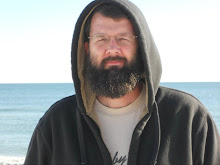
I have created a bit of shock at my house recently, having shaved off my beard, which was rather full, after several years of wearing it longer than my wife would prefer. I have worn a beard now in some form or fashion for close to 8 years, so it was a shock to all in the house, including myself, to see my naked chin.
You would think that shaving a beard would be nothing to write about, and I'm not sure that it is. It's just that we put so much emphasis on our appearance, even when our emphasis is on the lack thereof. Beards have been on my radar for many years and often the most intriguing people in the history books are those with the interesting facial hair. My most favorite picture of Frederick Douglas is the one in which he sports his massive beard proudly, and it is that photograph that makes me wonder what a absolute force of nature that he must have been to deal with as a abolitionist. My interest in monasticism is no different. As I search the archives of materials available to us on the web, my restless eyes often stop to stare at those interesting monks with the long beards. What lies behind those eyes? What of spiritual battles would those gray beards tell? Like the rings of a tree, I often read of years gone by in the shades of gray in an old monk's beard. So it is no coincidence I suppose that many of my spiritual heroes are bearded spiritual warriors, with beards far exceeding setting number 3 on their electric razors, if they were to have one.
You can see by now the meanings one might attach to a beard. Anything of this earth could run the risk of becoming an idol, and many times as I enjoyed the benefits of a beard on a winter day I have thought to cut the darn thing off just to prove to myself that I had no unnatural attachment to it. As the weather has gotten warmer many of my homeless brothers have come to the Hope House and made use of the electric trimmers and shaved off their proud winter manes. Having no interest in setting number 3, they have straight down to the skin, not caring for anyone's opinion of their clean shaven face any more than they cared what others thought of a scraggly beard.
So what of this setting on the beard trimmer that I have referred to as setting number 3? It might not be number 3 on your trimmer at home, but you are familiar with the setting. It's the one that's "just right". Not too long, not too short. Every woman finds it sexy, or distinguished, or, even better, appropriate. If you want your facial hair approved by the masses, setting number 3 is just right for you. My wife would love for me to keep my beard trimmed to setting number 3, although her desire to avoid any attempt to control me would never allow her to say so. I am also sure that she must be baffled at why I would go from a long beard to a clean face, buzzing my way right pass setting number 3. Just as setting number 3 means something to the masses, it means something to me. For the masses, the man with the "just right" beard is safe, non-threatening, a little dangerous but not really, sensitive but physiologically proving his body still can produce a little testosterone. We have emasculated the men of our society as we seek for androgynous balance, having somewhere in the 1980's lost any sense of why men ought be different or do anything other with themselves than setting number 3. You might say that freedom of beard length is akin to freedom of conscience, perhaps an outward sign that interiorally you aren't getting out of line. "Excuse me, Doctor, was there any sign that Mr. Smith wasn't going to cooperative with our indoctrination?" "No, none at all. Hair cut above the ears, beard trimmed to setting number 3".
So next time we see a homeless man with an unkempt beard we should ask ourselves what those visual cues mean to us, and what they may mean to him. It is not as I hope you can see, without meaning for any of us. Let us love one another, those with big beards and those clean shaven, and remember, don't drink the kool-aid and stay away from setting number 3.